
Most Dangerous Roads in America: Florida Edition
The Most Dangerous Highways in Florida: Why They Rank Among the Deadliest in the Nation, And the State’s Initiatives to Reduce Alarming Accident Rates.
Four of the nation’s top ten deadliest highways are located right here in the Sunshine State. It’s insights like these that make you wonder, why are Florida roads so dangerous? Factors like heavy traffic, outdated infrastructure, high-speed limits, a booming population, and an increase in tourism and snowbirds all contribute to the dangers. Fortunately, Florida is addressing these challenges through major projects and statewide initiatives aimed at improving its most dangerous and congested highways.
But in the meantime, in this blog, we’ll take a closer look at the most dangerous highways in Florida, the factors that make them so deadly, and the improvements underway.
Four of the Nation’s Top Ten Deadliest Highways
#1 Deadliest Highway Nationwide – Interstate 4 (I-4)
I-4, spanning 132 miles from Tampa to Daytona Beach, is consistently ranked as the most dangerous highway in Florida and the entire United States, with a staggering 1.134 deaths per mile.
Tourism & Poor Infrastructure
One major contributor to I-4’s risks is its role as a connector between some of Florida’s most populated and visited cities. Orlando, located at the heart of I-4, is a global tourist hotspot, home to Walt Disney World, Universal Studios, and other major attractions. March has the highest rate for accidents on I-4, largely due to increased tourism during spring break. Tourists have to navigate extremely large highways with poor interconnectivity, confusing exits, and outdated infrastructure that struggles to meet modern traffic demands. These challenges, along with constantly looking at the GPS for navigation, often lead to sudden braking, last-minute lane changes, and abrupt merging. This is particularly evident in areas like Downtown Orlando, where poorly designed interchanges create bottlenecks and driver frustration.

Ongoing Improvements
Efforts are underway to address the challenges along I-4 through FDOT’s Moving I-4 Forward Program. Key projects include adding auxiliary lanes near Champions Gate, a bustling resort and residential community southwest of Orlando, and World Drive, a main access road to Walt Disney World. These expansions aim to reduce congestion and improve traffic flow in areas heavily traveled by tourists and locals alike, with significant relief expected by 2025.
Improvements are also being made at the I-4 and U.S. 17-92 interchange, an area serving as a critical connection point for travelers heading into the Orlando metropolitan region. The project includes adding right-turn lanes, upgrading pedestrian and bicycle infrastructure, and redesigning the flow of traffic to reduce congestion and accidents.
Four of the Nation’s Top Ten Deadliest Highways
#3 Deadliest Highway Nationwide – U.S. Route 192
U.S. Route 192, a 75-mile highway stretching from Four Corners to Indialantic, is ranked 3rd most dangerous highway in America. While it serves as a gateway to tourist-heavy areas like Kissimmee, it is also one of the most dangerous roads for pedestrians, with a fatality rate of 0.867 deaths per mile. While this commercial boom has made the area vibrant, U.S. Route 192 was not originally designed to handle such significant pedestrian activity.
A Concern for Pedestrians
Pedestrians on U.S. Route 192 often face significant risks when navigating the roadway. The wide, multi-lane design, combined with a lack of safe crosswalks, forces many to weave through traffic to reach their destinations. Poor nighttime lighting, particularly in less-developed areas, further heightens the danger by making it difficult for drivers to spot pedestrians in time to stop. Despite Route 192’s role as a bustling commercial corridor, many sections maintain high speed limits increasing both the likelihood and severity of accidents.
Ongoing Improvements
Efforts to enhance infrastructure along U.S. Route 192 are currently underway. FDOT is resurfacing the highway from I-95 to State Road 507 in Melbourne to extend the roadway’s lifespan and improve overall safety. Additionally, lighting improvements and plans for better pedestrian crossings are being implemented in high-risk areas to reduce accidents involving pedestrians. In the Kissimmee area, there are ongoing discussions about redesigning sections of U.S. 192 to better accommodate pedestrian traffic, including adding raised medians, more clearly marked crosswalks, and speed limit reductions in heavily trafficked zones.
Four of the Nation’s Top Ten Deadliest Highways
#5 Deadliest Highway Nationwide – U.S. Route 92
U.S. Route 92, spanning 177 miles from St. Petersburg to Daytona Beach, is ranked the 5th most dangerous highway in America with a fatality rate of 0.706 deaths per mile. Tampa is one of the fastest-growing metropolitan areas in Florida, leading to an increase in both residential and commercial developments along U.S. 92. This growth contributes to heavy traffic congestion as commuters, tourists, and commercial vehicles all use this major route.
Population Growth
Infrastructure is a major issue on U.S. Route 92. Tampa has experienced significant growth over the past decade. Narrow lanes, limited shoulders, poor visibility, and poorly designed interchanges, such as those near Dale Mabry Highway, frequently lead to accidents. Furthermore, ongoing construction to expand U.S. 92 to accommodate Tampa’s growing population contributes to congestion and safety hazards. Lane closures, shifting traffic patterns, and construction vehicles create additional challenges for drivers, resulting in a higher risk of accidents.
Driving Under the Influence
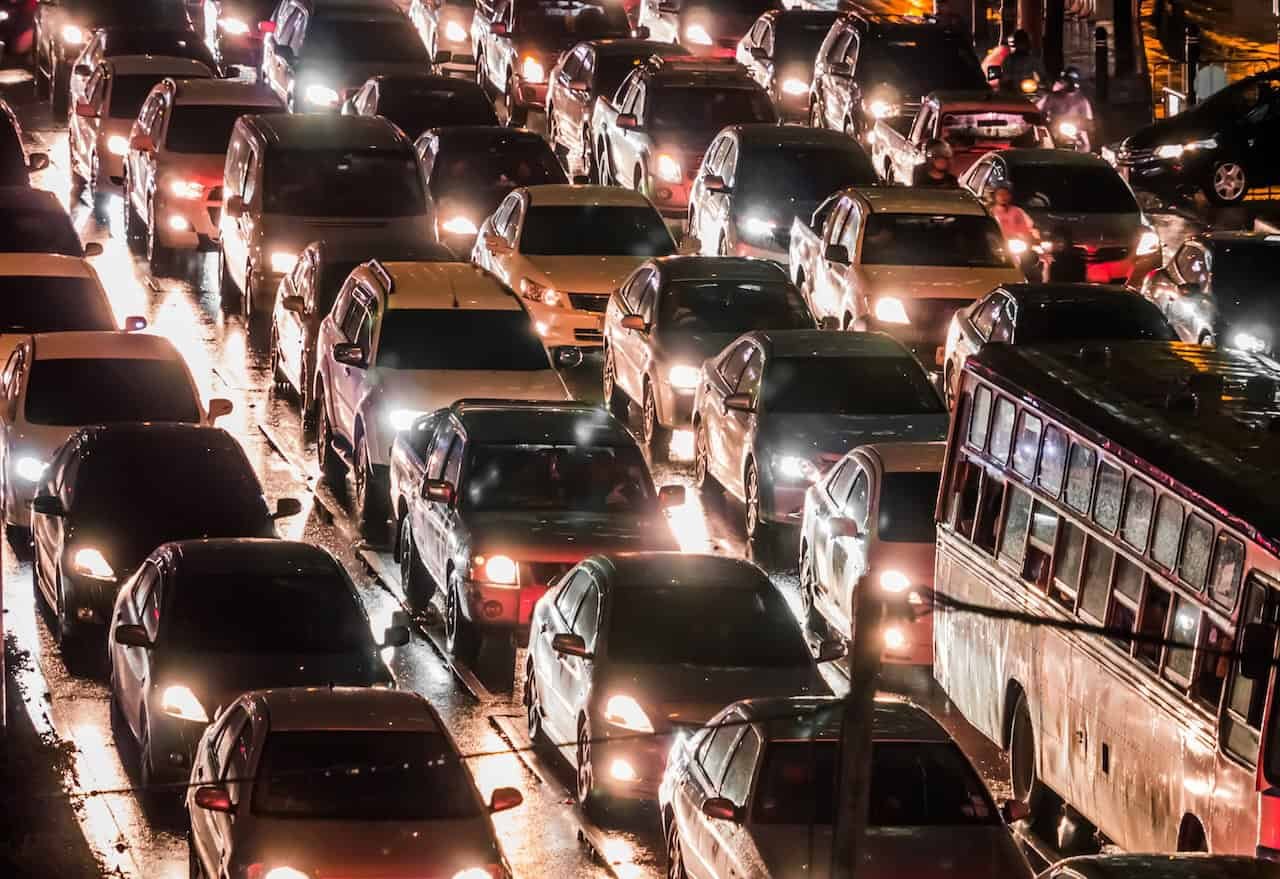
Driving under the influence is also a significant concern in Tampa, a city renowned for its vibrant nightlife. However, the limited availability of public transportation and the high cost of rideshare services, especially during peak hours, often lead individuals to drive themselves. Furthermore, Amalie Arena, located just off this highway, regularly hosts major sports events and concerts, drawing crowds from across the region. After these events, heavy traffic, unfamiliarity with the area, and impaired driving create a hazardous environment, significantly heightening the likelihood of accidents, especially when driving under the influence.
Ongoing Improvements
FDOT has initiated intersection improvements at U.S. 92 and 94th Avenue in Tampa, which include ramp upgrades to improve traffic flow and reduce bottlenecks. Additionally, FDOT is implementing advanced traffic management systems along U.S. 92, particularly on Hillsborough Avenue. These systems include real-time traffic monitoring with sensors and cameras, adaptive traffic signals that adjust based on congestion levels, and digital message boards to inform drivers about delays or alternate routes. This system is expected to improve the flow of vehicles, especially during peak hours.
Further, plans to widen certain segments of U.S. 92 and add safer pedestrian infrastructure, such as better-lit crosswalks and raised medians, are under discussion to accommodate the growing population and reduce risks.
Four of the Nation’s Top Ten Deadliest Highways
#8 Deadliest Highway Nationwide – Interstate 95 (I-95)
I-95, spanning 1,908 miles from Miami, FL to Houlton, ME is ranked the 8th most dangerous highway in America with a fatality rate of 0.637 deaths per mile.
Congestion Along Florida’s Major Cities
Running along the east coast of Florida, I-95 connects some of the state’s most bustling cities, including Miami, Fort Lauderdale, West Palm Beach, and Jacksonville. These cities are not only major work hubs attracting commuters daily but are also known for heavily congested traffic due to the seasonal influx of snowbirds and tourists. On top of this, constant road construction to accommodate Florida’s booming population further exacerbates the congestion and safety risks.
Jacksonville’s Commercial Truck Traffic
Jacksonville is the deadliest city along I-95, largely due to its heavy commercial truck traffic and complex interchanges. As a key route for freight transport, I-95 near Jacksonville often accommodates a significant number of large trucks. These vehicles require longer stopping distances and have substantial blind spots, making them prone to severe accidents with smaller passenger cars. The challenges are compounded by Jacksonville’s intricate network of interchanges, particularly where I-95 intersects with I-10, U.S. 1, and I-295. These junctions are confusing for unfamiliar drivers, leading to sudden lane changes, merging conflicts, and traffic backups during peak hours. Combined with the already congested nature of I-95 throughout Florida, the result is a heightened risk of side-impact and rear-end collisions.
Ongoing Improvements
FDOT is undertaking several projects to improve safety and traffic flow along I-95. In Jacksonville, work is underway to enhance the I-95 and I-10 systems interchange. This project includes the construction of new flyover ramps, expanded lanes, and updated signage to make the interchange less confusing for drivers. In South Florida, the Golden Glades Interchange near Miami is receiving a major overhaul to address its reputation as one of the most congested sections of I-95. Improvements include better traffic flow designs, widened lanes, and advanced traffic management systems.

Additionally, FDOT is focusing on lighting upgrades, including installing LED lights along key stretches of I-95 to improve nighttime visibility and reduce accidents. There are also plans to add rumble strips and enhance lane markings to prevent lane departures.
Florida’s Road Safety Initiatives
Florida has undergone significant changes over the past decade. The continual increase in new residents and visitors heightens demands on its infrastructure. To account for this growing population, the state has initiated projects to address its notoriously dangerous and congested highways, such as I-4, U.S. 192, U.S. 92, and I-95. Beyond these targeted improvements, Florida has also launched broader initiatives to enhance road safety statewide.
Wrong Way Vehicle Detection System
One example is the $45 million Wrong Way Vehicle Detection System expansion, which aims to prevent head-on collisions by installing advanced detection systems at 380 more off-ramps. These systems alert drivers when they are traveling in the wrong direction and notify authorities to respond quickly. Another major effort is the $60 million investment in rumble strips—grooved patterns installed on over 3,000 miles of highways to alert drivers if they unintentionally drift out of their lane, reducing the risk of accidents.
Florida’s Motor Vehicle Accident Lawyers Since 1991
These dangerous highways in Florida are among the most dangerous in the nation, with reckless driving, high traffic volumes, and outdated infrastructure posing significant risks to drivers and pedestrians alike. If you or a loved one has been injured in a car accident on one of Florida’s highways, you don’t have to face the aftermath alone. The Law Offices of Scott Jay Senft have decades of experience helping victims of reckless driving and highway accidents recover the compensation they deserve. Our team understands the unique challenges posed by Florida’s roads and will fight to ensure your rights are protected. Contact us today for a free consultation and take the first step toward justice and recovery. Your safety matters, and so does your case.