Jul 2, 2024
Medical Malpractice Explained
Learn About Florida’s Medical Malpractice Through Navigating the Laws, Common Examples, And Steps to Take If You Suspect Negligence.
Overview of Medical Malpractice
Medical malpractice is a distressing reality that many individuals face when seeking medical care. Florida has specific laws governing medical malpractice to protect patients’ rights and ensure accountability within the healthcare system. Understanding these laws is crucial for attaining the justice and compensation you deserve if you have suffered due to a medical professional’s negligence.
What is Medical Malpractice?
Medical malpractice can occur if a doctor is careless and makes a medical error that causes harm to the patient. Examples of medical malpractice may involve a misdiagnosis, improper treatment, or surgical error. Doctors and medical professionals have a duty of care to their patients; in other words, healthcare professionals are expected to treat patients with the same level of diligence and care as any other professional would. A breach of that standard of care is legally defined as “negligence” or a sort of carelessness on the doctor’s end. To establish a malpractice claim, there must be evidence that directly links the negligence to some form of permanent or long-term damage. This evidence is essential to any malpractice claim as compensation is awarded in accordance with the perceived damages.
What is the Duty of Care in Relation to Medical Malpractice?
Duty of care in the context of medical malpractice refers to the legal obligation of medical professionals to provide care that meets established standards of practice. This means that doctors, nurses, and other healthcare providers must exercise the same level of skill, knowledge, and attentiveness that a similarly qualified professional would under comparable circumstances. This is what’s legally considered as a professional’s duty of care. For example, if a patient presents symptoms of appendicitis, the duty of care requires the doctor to diagnose and treat the condition as another doctor would, which involves a physical examination or surgery. Healthcare providers are obligated to prioritize the well-being of their patients, which is their duty of care, and they must exercise diligence and caution when managing medical matters.
Understanding Medical Malpractice
The Implications of Medical Malpractice in Personal Injury Law
Laws Governing Medical Malpractice in Florida
Medical Malpractice Expert Testimony
A key element is the requirement for medical malpractice plaintiffs to obtain a affidavit from a medical expert attesting to the validity of their claim before filing a lawsuit. An affidavit acts as an expert testimony – an essential piece of evidence. The affidavit establishes the standard of care owed to the patient and demonstrates how the healthcare provider deviated from that standard, resulting in harm.
Statute of Limitations Medical Negligence
In Florida, medical malpractice cases are governed by the Medical Malpractice Act, which outlines the procedures and requirements for filing a malpractice claim. One significant aspect of this act is the statute of limitations, which limits the time within which a patient can file a lawsuit against a healthcare provider for malpractice. According to Florida law, the statute of limitations for medical malpractice is two years from the date of the incident or from the date the malpractice was discovered, i.e., “discovery rule”, with certain exceptions for cases involving minors (under 8 years) or fraudulent concealment.
Why is There a Discovery Rule for Medical Malpractice?
In Florida, there’s a discovery rule in place for medical malpractice claims. This rule allows for a longer period to file a claim if the malpractice isn’t immediately obvious. The statute of limitations for medical malpractice cases is typically two years, but the discovery rule allows some flexibility. This is important because it’s common for some time to pass before discovering a medical problem or mistake. For instance, if a procedure was done incorrectly, it might not be noticed right away. It could take time for another healthcare provider to spot the mistake or for symptoms to show up. The extended time limit gives you more opportunity to realize that there was negligence involved, so you’re not prevented from taking legal action just because you didn’t notice the error immediately.
Medical Negligence Compensation
In a medical malpractice case in Florida, plaintiffs may be entitled to recover several types of damages if they can prove that the healthcare provider’s negligence caused them permanent harm. These damages are generally categorized into economic and non-economic damages.
Economic damages include:
- Medical Expenses: Costs of past and future medical treatment related to the malpractice, including hospital stays, surgeries, medication, rehabilitation, and any other necessary medical services.
- Lost Wages: Compensation for income lost due to inability to work due to malpractice. This includes both past lost wages and future earning capacity if the plaintiff is unable to return to work.
- Other Out-of-Pocket Expenses: Any additional costs incurred due to the malpractice, such as transportation expenses for medical visits, home care, and medical devices.
Non-economic damages include:
- Pain and Suffering: Compensation for physical pain and emotional distress resulting from the malpractice.
- Loss of Consortium: Damages awarded to the spouse or family members of the victim for the loss of companionship, affection, and support.
- Disability or Disfigurement: Compensation for any permanent disability or disfigurement caused by malpractice.
Common Types of Medical Negligence
Understanding Medical Negligence
Surgical Errors
Operating on the Wrong Body Part
This error occurs when a surgeon operates on the wrong side or area of the body, which can lead to unnecessary complications and the need for additional surgeries to correct the mistake. Factors contributing to this error may include poor communication among surgical team members, inadequate pre-operative verification procedures, and failure to review medical records and imaging studies properly.
Leaving Surgical Instruments Inside the Patient
Surgeons or operating room staff may inadvertently leave surgical instruments, such as sponges, scalpels, or clamps, inside a patient’s body cavity during a procedure. This can result in infections, internal injuries, and other serious complications if not detected and removed promptly.
Performing Unnecessary Surgery
Performing surgery that is not medically necessary exposes patients to unnecessary risks, such as complications from anesthesia, surgical site infections, and longer recovery times. Reasons for unnecessary surgeries may include misdiagnosis, financial incentives, or patient pressure.
How to Prove Medical Malpractice for Surgical Errors
For surgical errors, the duty of care could be avoiding unnecessary surgery. The breach of duty, which must be confirmed by an affidavit, is performing unnecessary surgery. The cause of the breach could be a surgeon wanted to increase medical bills. The harm experienced by the patient is post op complications that could have been avoided altogether. Finally, the outcome is pain and suffering, unnecessary/additional treatment, medical bills, lost wages, and more.
Misdiagnosis or Delayed Diagnosis
Failing to Accurately Diagnose a Medical Condition
When healthcare providers fail to identify a patient’s medical condition correctly, it can lead to inappropriate or delayed treatment, allowing the condition to progress and worsen. Common factors contributing to misdiagnosis include inadequate medical history taking, misinterpretation of diagnostic tests, and reliance on assumptions or stereotypes.
How to Prove Medical Malpractice for Misdiagnosis
For a misdiagnosis, the breach of duty, that must be confirmed by an affidavit, is the misdiagnosis. The cause of the breach could be a doctor misinterpreting the diagnostic test. The harm experienced by the patient is receiving the wrong treatment which caused an allergic reaction. Finally, the outcome is pain and suffering, unnecessary/additional treatment, medical bills, lost wages, and more.
Delayed Diagnosis
Even if a correct diagnosis eventually occurs, delays in diagnosis can still result in significant harm to the patient, including progression of the disease to an advanced stage, increased treatment complexity, and reduced effectiveness of available treatment options. Delays may stem from healthcare system inefficiencies, patient-related factors, or healthcare provider errors.
How to Prove Medical Malpractice for Delayed Diagnosis
For a delayed diagnosis, the breach of duty is the delayed diagnosis. The cause of the breach could be a doctor not finding/forgetting about the diagnostic test until several months later. The harm experienced by the patient is a worsening of the illness, making it untreatable or not as easily treatable had it been discovered months in advance. Finally, the outcome is pain and suffering, unnecessary/additional treatment, medical bills, lost wages, and more.
Medication Errors
Administering the Wrong Medication
Giving a patient the wrong medication can lead to adverse drug reactions, allergic reactions, and ineffective treatment of the underlying medical condition. Factors contributing to medication errors include look-alike or sound-alike drug names, illegible handwriting on prescriptions, and inadequate patient identification procedures.
Incorrect Dosage
Administering an incorrect dosage of medication, whether too much or too little, can result in adverse effects ranging from mild discomfort to life-threatening complications. Factors contributing to dosage errors include mathematical miscalculations, miscommunication between healthcare providers, and lack of standardized dosing protocols.
Failing to Consider Potential Drug Interactions
Neglecting to review a patient’s medication history and consider potential drug interactions can lead to harmful effects, such as reduced efficacy of medications, increased risk of side effects, and drug toxicity. Healthcare providers must remain vigilant in assessing potential interactions between prescribed medications, over-the-counter drugs, and dietary supplements.
How to Prove Medical Negligence for Medication Errors
For medical errors, the breach of duty, that must be confirmed by an affidavit, could be giving a patient the incorrect dosage. The cause of the breach could be a doctor misreading the lab test results. The harm experienced by the patient is receiving the wrong dosage which caused an overdose. Finally, the outcome is pain and suffering, unnecessary/additional treatment, medical bills, lost wages, and more.
Birth Injuries
Negligence During Childbirth
Errors or negligence during the delivery process can result in birth injuries to the newborn, such as nerve damage, fractures, or oxygen deprivation leading to brain damage. Additionally, mothers may experience injuries such as tears, hemorrhage, or infection due to improper use of medical instruments or failure to provide adequate medical care during labor and delivery.
Improper Use of Medical Instruments
Misuse or improper handling of forceps, vacuum extractors, or other birth-assisting devices can cause trauma to the infant’s head or body, leading to long-term disabilities or developmental delays.
Failure to Monitor Fetal Distress
Inadequate monitoring of the fetal heart rate or failure to recognize signs of fetal distress can result in delays in necessary interventions, such as emergency cesarean section delivery, increasing the risk of birth complications and injuries to both the baby and the mother.
How to Prove Medical Malpractice for Birth Injuries
For birth injuries, the breach of duty, that must be confirmed by an affidavit, could be failure to recognize signs of fetal distress. The cause of the breach could be an inadequately trained practitioner monitoring the fetus. The harm experienced by the patient is fetus with developmental issues. Finally, the outcome is pain and suffering, long term disability, medical bills, lost wages, and more.
Steps to Take After Experiencing Medical Malpractice
Your health and well-being should always be the top priority. Seek medical attention to address any immediate concerns and document your injuries.
Collect any relevant medical records, prescriptions, an affidavit, and documentation related to your treatment and experience.
An experienced medical malpractice attorney can assess your case, advise you on your legal options, and guide you through the process of filing a claim.
Hiring A Medical Malpractice Attorney
Initiating a medical malpractice claim serves a dual purpose: fixing individual grievances and fostering systemic improvement within the healthcare sector. When healthcare providers exhibit negligence or fail to adhere to safety protocols, accountability becomes paramount. Pursuing compensation not only addresses personal harm but also contributes to the broader goal of enhancing patient care standards.
Medical malpractice can have devastating consequences for victims and their families, both physically and emotionally. By consulting with a knowledgeable personal injury lawyer who specializes in medical malpractice cases, you can increase your chances of obtaining fair compensation for your injuries and holding negligent healthcare providers accountable. Remember, you don’t have to navigate this challenging journey alone—help is available to support you every step of the way.
If you or a loved one has been a victim of medical malpractice, our experienced attorneys are here to help. Contact us today for a free consultation and take the first step towards securing the justice and compensation you deserve.
Jun 29, 2024

Parking lots can be hazardous places for both drivers and pedestrians. There are several factors that contribute to accidents in parking lots. recovery of damages available to you under the law. For a free case evaluation, call (954) 505-2183 to reach a lawyer.
Primary Causes of Parking Lot Accidents
It’s evident that distracted driving is a major cause, with many drivers admitting to using their phones or engaging in other distractions while navigating parking lot traffic. According to the NSC, 9% of pedestrian deaths in parking lots are caused by backup incidents. Children are especially vulnerable, often going unnoticed by drivers backing out of spaces, leading to injuries or even fatalities.
Poor signage can also lead to confusion and collisions, as drivers may not know where to yield or stop in the private lot. Inadequate lighting, in a parking lot, can lead to unsafe conditions and even unwanted crime. Sometimes there are broken or uneven surfaces in the parking lot that often go unmarked and unfixed. This increases the risk of slips and falls for pedestrians.
Common Parking Lot Accidents
Parking lot accidents, though often minor compared to high-speed road collisions, can still result in significant damage and inconvenience. These accidents typically occur at low speeds but can cause injuries and substantial vehicle damage. Here is a list of common parking lot accidents:
Backing Out Collisions
Two vehicles backing out of their respective parking spaces simultaneously can collide if neither driver sees the other.
Rear-End Accidents
A vehicle stops abruptly in a parking lot, and the following vehicle doesn’t have enough time to stop, resulting in an accident.
Pedestrian Accidents
Drivers not paying attention to pedestrians walking through the parking lot can lead to accidents, sometimes resulting in serious injuries. For example, slip and fall incidents caused by uneven pavement in parking lots, broken sidewalks, and other hazards can result in severe injuries.
Hit-and-Run Incidents
A driver hits another vehicle or a pedestrian and leaves the scene without providing contact information, often leaving the victim to deal with the aftermath.
What to do if Involved in a Parking Lot Accident
If you find yourself involved in a parking lot accident, it is crucial to take immediate action to protect your interests. First, report the accident to the local authorities, even if it seems minor. This ensures an official record is made, which can be invaluable later. , gather the information of all parties involved, including their names, contact details, insurance information, and vehicle descriptions. Third, if there are any witnesses, collect their contact information as their testimony can provide critical support for your case. Finally, document the scene by taking photographs of the vehicles, the surrounding area, and any property damage or injuries. These steps are vital in creating a comprehensive record that can be used to substantiate your claims.
Maximizing Compensation with a Personal Injury Attorney
Taking these actions will significantly aid your attorney in seeking compensation for any injuries you may have sustained. By providing detailed documentation and witness accounts, your attorney can build a strong case on your behalf. An experienced attorney will navigate the legal complexities, negotiate with insurance companies, and advocate for your best interests to ensure you receive the compensation you deserve. Having a well-documented case will make it easier for your attorney to demonstrate the extent of your damages and hold the responsible parties accountable.
Legal Responsibilities of Parking Lot Owners
Parking lot owners have a legal duty to maintain their premises to prevent foreseeable injuries. This includes ensuring that entryways, parking lots, and sidewalks are safe for public use. When owners fail to repair dangerous conditions that could lead to injuries, they can be held liable. Common hazards in parking lots that can lead to accidents include unfilled potholes, inadequate lighting, broken pavement, and uneven sidewalks. These conditions can pose significant risks to pedestrians, causing slips, falls, and other injuries.
Florida’s Limitation on Premises Liability
Florida Statute 768.0705 offers legal protection to pedestrians by requiring property owners to maintain a safe environment. It also protects owners or operators of businesses and private lots regarding liability for criminal acts that occur on their property. Here is an explanation of the statute:
- Security Measures Requirement: Convenience business owners or operators must implement security measures. These security measures typically include things like proper lighting, security cameras, and other protocols to ensure the safety of customers.
- Presumption Against Liability: If the business has these security measures in place, they benefit from a legal presumption against liability. This means that if a criminal act happens on their premises, and it is committed by someone who is not an employee or agent of the business, the owner or operator is presumed not to be liable for the incident.
This law encourages businesses to adopt effective safety measures in their parking lots by offering them legal protection. If they maintain these safety protocols, it becomes more difficult to hold them liable for accidents occurring in their parking lots. This presumption serves as a strong defense in legal cases involving premises liability claims.
If you have ever been involved in a parking lot accident, you may be able to seek compensation if the property owner failed to ensure adequate safety measures. An experienced attorney can help you navigate the legal process and hold the parties responsible for their negligence, ensuring you receive the compensation you deserve.
Who is at Fault in a Parking Lot Accident?
Florida is a modified comparative negligence state, where compensation is determined by the degree of fault, and you cannot claim compensation if you are more than 50% at fault. To accurately determine fault, it’s beneficial to consult an attorney. They can gather evidence from the accident scene, collect witness statements, and, if necessary, use expert testimony. Once fault is established, the attorney can build a case for compensation based on the injuries and damages sustained. Additionally, with the help of an attorney, you can maximize compensation and seek recovery from the at-fault party, ensuring that you receive the full amount of damages you are entitled to despite the complexities of Florida’s no-fault and comparative negligence systems.
Get Expert Legal Representation
The Law Offices of Scott J. Senft are dedicated to helping you secure the compensation you deserve. With over 30 years of experience, our seasoned team is committed to exploring every legal avenue to ensure your case is handled both effectively and efficiently. We are experts in the field, and we are dedicated to securing your wellbeing and recovery.
Our priority is to ensure you have a speedy recovery while we take the burden off your shoulders and work tirelessly on your case. If you have experienced a parking lot accident or injury, do not hesitate to reach out to us. Call (954) 505-2183 for an immediate and free consultation with a personal injury attorney. For a call back after a case evaluation, submit a form.
Jun 28, 2024

Workplace Injuries
Workplace injuries are an unfortunate reality for many employees, often resulting from unsafe working conditions that employers have failed to address. These incidents can range from minor accidents to severe, life-altering injuries, impacting not only the physical well-being of workers but also their financial stability. It is crucial for injured employees to understand their rights and the avenues available for receiving compensation. Employers have a legal and moral obligation to provide a safe work environment, and when they fall short, employees can seek compensation through various legal channels, ensuring they are supported during their recovery and beyond.
Workplace Safety: Common Injuries
Workplace injuries are a concern across many industries, posing significant risks to employees’ health and safety. These injuries, ranging from minor cuts and bruises to severe fractures and strains, can occur due to numerous factors such as slips, trips, falls, and exposure to hazardous materials. Below are common workplace injuries:
Slips, Trips, and Falls
Slips, trips, and falls are among the most common workplace injuries. Wet or slippery surfaces, obstacles in walkways, and improper footwear are typical culprits. Falling from ladders, stairs, or roofs also poses significant risks. These incidents can result in broken bones, sprains, head injuries, and other painful conditions.
Machine Entanglement
In industries like manufacturing, construction, and agriculture, machine entanglement is a serious risk. Clothing, hair, and body parts can get caught in machinery, leading to severe injuries such as crushed limbs, severed fingers, or blindness.
Repetitive Motion Injuries
Repetitive motion injuries, though less visible, can be highly debilitating. Tasks like typing or using a mouse can strain muscles and tendons, causing conditions such as carpal tunnel, wrist pain, and backaches. These injuries can significantly impair an employee’s ability to perform their job.
Vehicle-Related Accidents
Employees who drive for work are at risk of vehicle-related accidents, which can sometimes be fatal. They may also be injured by being run over, crushed, or trapped under vehicles.
Overexertion Injuries
Overexertion injuries result from activities like heavy lifting, carrying, pulling, and pushing. These injuries can lead to significant productivity loss and high healthcare costs.
Fire and Explosions
Fires and explosions can occur due to faulty gas lines, improper storage of combustible materials, and open flames. These incidents can cause severe burns, respiratory damage, and even disfigurement.
Workplace injuries can have long-lasting impacts on your health, well-being, and ability to work. Seeking legal advice can help you navigate the complexities of workplace injury claims and ensure that you receive the compensation you deserve for your injuries.
How Can I Receive Compensation for My Workplace Injury?
First, seek medical attention to address your injuries and document your condition. Report the incident to your employer as soon as possible, ensuring that an official record is made. Then, collect any evidence related to the accident, like pictures of the scene and witness statements. Most importantly, contact a personal injury lawyer who specializes in workplace injuries. If you have experienced a workplace injury, an experienced lawyer can guide you through the legal process, protect your rights, and work to secure compensation.
Legal Obligations of Employers
Providing a Safe Work Environment
In workplaces across Florida, ensuring the safety and well-being of employees is not just a moral imperative but a legal obligation. Florida Statute 442.007, Requires every employer to provide a work environment free from hazards endangering their workforce’s lives, health, and safety. This includes the provision and use of appropriate safety devices and methods to mitigate risks and maintaining standards of sanitation and hygiene. If you have been injured at work because your employer failed to provide a safe and proper work environment, you may be entitled to compensation.
Proper Safety Inspections
Florida statute 442.004 states rules for safety inspections and consultations conducted by employers. These rules define the methods, frequency, and protocols to ensure workplace safety compliance. For example, a transportation company must conduct regular safety inspections of its vehicles, including brakes, lights, and tires, to maintain compliance with safety regulations. Another example is when large manufacturing plants schedule regular consultations with safety experts to assess and enhance workplace safety protocols. This reduces potential hazards and workplace accidents, ensuring employee welfare. Companies are legally obligated to ensure the safety of their employees. If you have been injured at work due to a company’s negligence in maintaining equipment and failing to schedule proper safety inspections, you deserve fair compensation for your injuries.
Employers Held Accountable
Statute 442.013 sets out penalties for employers who do not follow safety rules or orders. They can face fines ranging from $100 to $5,000 per day of violation, with a maximum of $50,000 per incident. These fines depend on how serious and frequent the safety violations are. This statute encourages employers to prioritize worker safety, ensuring safer workplaces in all industries.
Do I Need a Lawyer for My Workplace Injury?
A personal injury lawyer specializing in workplace injuries will assist you in navigating intricate paperwork, meeting deadlines, and negotiating with insurance companies to ensure you receive fair compensation. While it is possible to file a workplace injury claim independently, having a lawyer on your side provides expertise and advocacy that can significantly enhance your chances of a successful outcome. Their knowledge of legal processes related to workplace injuries and their ability to handle negotiations can relieve stress and ensure your rights are protected throughout the process.
Choosing the Right Workplace Injury Lawyer
Hiring the right workplace injury lawyer is crucial for several reasons, particularly in ensuring you receive the compensation you deserve. The Law Offices of Scott J. Senft offer decades of experience specifically in handling workplace accidents. They possess in-depth knowledge of the laws governing safety standards in workplaces, enabling them to effectively hold employers accountable for negligence or misconduct. Choosing a lawyer with such expertise is pivotal as they can navigate complex legal processes, negotiate with insurance companies, and advocate for your rights diligently. This initial step with Scott Senft’s team sets the foundation for your recovery and ensures you receive fair compensation for your injuries. If you have any questions regarding your workplace injury case, do not hesitate to call them today to schedule a free consultation with one of their knowledgeable attorneys.
Jun 14, 2024
What is Auto Negligence in Florida?
Negligence occurs when a person fails to exercise reasonable care, resulting in harm to another person. In the context of car accidents, negligent behavior involves violating traffic laws, driving recklessly, or failing to pay attention while driving, amongst other actions. If another is harmed due to negligent behavior, the injured person is legally entitled to compensation for the harm caused. Compensation can cover medical expenses, lost wages, and other related costs.
Key Elements of Negligence in Florida Car Accidents
Negligence occurs when a person fails to exercise reasonable care, resulting in harm to another person. In simple words, negligence can be understood as carelessness resulting in harm. In Florida, understanding the key elements of negligence is crucial for determining liability and seeking compensation in personal injury cases. Personal injury accidents extend beyond physical suffering; they often encompass emotional distress and financial strain. Moreover, depending on the severity of the injury, a person may be required to take time off work all while the medical bills pile on. Accident victims experience the unfair phenomena of life in which the victim of an already unlucky situation must now also endure its aftermath. This is where the law steps in. Car accident attorneys are dedicated to securing compensation from the responsible party to alleviate the burden of accidents. With the help of an attorney, the at-fault party will pay for your medical bills, lost wages, and more. This article outlines the key elements of negligence in Florida and how they impact your right to compensation.
Modified Comparative Negligence
Florida follows a “modified comparative negligence” rule, meaning that each party involved in an accident can be assigned a percentage of fault, and their compensation is reduced by their share of the fault. If the injured party is partially at fault for their injuries, their compensation is reduced proportionately to their degree of fault. However, if the degree of fault exceeds 50%, you are not entitled to compensation. For example, if a driver is involved in an accident and found to be 35% at fault while the other driver is 65% at fault, the partially at-fault driver can still recover damages. However, their compensation will be reduced by 35%. So, if the total damages were $10,000, they would receive $6,500 after the reduction. This rule does not apply to cases of personal injury or wrongful death arising from medical negligence. To be considered partially at fault for an accident, the opposing party has to identify and prove that a negligent act contributed to the severity of the damages (injuries) being claimed. For instance, if you were rear-ended at a stop light, you are clearly not at fault for the accident itself. However, if you failed to abide by Florida’s car seat laws, the at-fault party can argue that the child’s injuries were exacerbated by this, thereby reducing your compensation due to your contribution to the damages.
Determining Negligence in Florida

Determining negligence in Florida involves evaluating several key elements to establish who is responsible for the accident. In simple terms, to establish negligence, you need to check if the person had the legal responsibility to be careful (duty of care), failed to do so (breach of duty), and if this failure caused the accident (causation) and resulted in injury or damage (harm). To best prove this, it is essential to gather evidence such as witness statements, police reports, medical records, and any other relevant documentation.
Examples of Negligence in Car Accidents
Driving Under the Influence:
Scenario: A driver is under the influence of alcohol, runs a red light, hits a pedestrian and breaks his leg.
- Duty of Care: The driver has a legal responsibility to operate the vehicle safely and soberly. This includes following traffic laws, paying attention, and avoiding impairing substances to ensure the safety of all road users.
- Breach of Duty: By driving while intoxicated, the driver fails to uphold this responsibility. Intoxication impairs judgment and reaction time, violating safety standards and increasing the risk of accidents.
- Causation: The impaired judgment and reaction time due to intoxication lead to running the red light and causing the accident. The driver’s inability to react appropriately results directly from their intoxicated state.
- Harm: The intoxicated driver runs a red light and hits a pedestrian, breaking the pedestrian’s leg. This results in physical injury, medical expenses, emotional trauma, and potential loss of income for the pedestrian.
- Outcome: The intoxicated driver is liable for the injury resulting from the accident. The driver must compensate the pedestrian for medical costs, pain, suffering, and lost income, and may also face criminal charges for driving under the influence.
Reckless Driving:
Scenario: A driver speeds through a red light and collides with another vehicle causing total loss of the vehicle.
- Duty of Care: The driver must follow traffic laws and drive safely. This involves adhering to speed limits, obeying traffic signals, and maintaining control of the vehicle. The duty of care ensures that all drivers act in a manner that prevents harm to themselves, other drivers, pedestrians, and property.
- Breach of Duty: Running a red light and speeding are violations of this duty. These actions demonstrate a disregard for traffic regulations and the safety of others. Such reckless behavior significantly increases the likelihood of accidents.
- Causation: The reckless behavior directly causes the collision. By running a red light and speeding, the driver creates a dangerous situation that leads to an inevitable accident. The driver’s failure to obey traffic laws and control their speed directly results in the collision
- Harm: The collision results in the other driver’s car being a total loss. The impact of the crash causes extensive damage to the other vehicle, rendering it irreparable.
- Outcome: The reckless driver is responsible for the other driver’s total loss of their vehicle. Legally, the reckless driver must compensate the other driver for the value of the totaled vehicle. This may include covering the cost of a replacement vehicle and any additional expenses incurred due to the accident.
Distracted Driving:
Scenario: A driver is texting and fails to notice the car in front of them stopping, leading to a rear-end collision. The driver of the stopped car is now suffering a concussion and has severe damage to the rear bumper.
- Duty of Care: The driver must pay full attention to the road and other vehicles. This vigilance is essential to prevent accidents and ensure everyone’s safety on the road.
- Breach of Duty: Texting while driving is a direct violation of Florida Statute 316.305, which prohibits texting while driving. This law is designed to reduce distractions and enhance road safety.
- Causation: The distraction causes the driver to fail to stop in time, leading to the collision. By focusing on their phone, the driver misses the stopped vehicle ahead, resulting in a rear-end collision.
- Harm: The rear-end collision results in the driver of the stopped car suffering a concussion and severe damage to the rear bumper. This causes both physical injury and significant vehicle repair costs.
- Outcome: The distracted driver is at fault for the accident and must compensate the injured party for medical expenses and car repairs. This includes covering the costs of the concussion treatment and the damage to the rear bumper.
Negligence in car accidents can have severe consequences, causing physical, emotional, and financial distress. Understanding personal injury laws and examples of negligence can help you recognize when you may be entitled to compensation.
What to do After Being Involved in a Car Accident in Florida
After being in a car accident, it is crucial to document the scene meticulously and gather witness information, as these steps are vital in establishing negligence. Keep a detailed record of all expenses related to the accident, including medical bills, repair costs, and any lost wages. Also, keep track of your injuries, pain levels, and how the accident has impacted your daily life.
Determining negligence involves proving that the other party did not act with the level of care that a reasonable person would under similar circumstances. Keep evidence such as photos of the accident scene, witness statements, and police reports. A Florida car accident attorney can help you navigate the complexities of negligence claims and work towards securing fair compensation for any damage or injuries sustained.
Path to Justice and Compensation
Understanding personal injury law and recognizing instances of negligence are crucial steps in seeking justice for your injuries. Through legal recourse, victims can hold negligent parties accountable for their actions, alleviating some of the burdens imposed by the accident. Ultimately, a thorough understanding of negligence empowers individuals to protect their rights and pursue the restitution they deserve after a car accident.
The Law Offices of Scott J. Senft provide the legal support and expertise required to pursue maximum compensation for your damages. With over three decades of experience in handling personal injury claims, our team is dedicated to delivering justice and fair compensation to their clients. Contact us for a free consultation today.
Jun 11, 2024
If you or a loved one has experienced a personal injury accident, it’s crucial to have an experienced attorney on your side fighting for your rights. A Florida personal injury lawyer ensures that you receive the maximum compensation attainable under law for medical expenses, lost wages, and more. Personal injury accidents can cause significant physical and emotional distress, and navigating the legal aftermath can be overwhelming. This blog will provide valuable information about types of personal injury accidents, damages you can recover, the legal aspects of personal injury cases, and why hiring a lawyer is essential for achieving a fair settlement.
What is a Personal Injury Accident?
A personal injury accident is defined as the suffering of damages or injuries caused by another party’s negligence or wrongful conduct. These damages can be physical, emotional, or financial. Personal injury cases often involve proving that the at-fault party failed to act responsibly, and that this failure directly caused your injuries. In 2020, there was a significant increase in cases being filed for legal action nationally. The number of personal injury cases surged by 97 percent, totaling 45,523 more cases compared to previous years.

Types of Personal Injury Claims
A Florida personal injury lawyer covers a broad range of incidents. The following are some of the most common types of personal injury cases:
Car Accidents
Car accidents frequently occur due to reckless driving, speeding, and driving under the influence. These incidents can result in significant injuries and complex legal battles to determine liability and compensation. This is especially true for multi-vehicle collisions or accidents involving rideshare services such as Uber or Lyft.
Truck Accidents
Injuries from truck accidents can be severe due to the size and weight of commercial trucks. These cases often involve intricate liability issues, including multiple parties such as drivers, trucking companies, and manufacturers.
Motorcycle Accidents
Motorcyclists are particularly vulnerable due to the lack of protective barriers. Motorcycle accidents often result in catastrophic, long-term injuries. Unfortunately, the most prevalent causes of motorcycle accidents are distracted driving by other drivers.
Pedestrian Accidents
Pedestrian accidents occur when vehicles strike individuals, often due to driver negligence. Pedestrians are at high risk, especially in urban areas where traffic density is high. It’s common for drivers to make a right or left turn and not see the pedestrian at the crosswalk due to speeding or distracted driving.
Slip-and-Fall Accidents
Slip and fall accidents happen in both public and private spaces due to hazardous conditions like wet floors, uneven surfaces, or poor lighting. They can lead to severe injuries such as fractures and head trauma. For example, restaurant owners may not notice that a customer spilled a drink. If that spilled drink leads to a slip and fall accident, the restaurant owner is liable for those injuries.
Aviation Accidents
Aviation accidents encompass more than just plane crashes. Injuries can occur during boarding, taxiing, in-flight, or landing. Common causes include pilot error, mechanical failures, and turbulence. Victims may pursue claims against airlines, manufacturers, or maintenance providers.
Boat Accidents
Boating accidents can result from operator inexperience, alcohol use, improper lookout, or machinery failure. These accidents can lead to serious injuries like spinal cord injuries, brain injuries, and even death. Liability can extend to the boat operator, owner, or manufacturer.
Florida Statute of Limitations for Personal Injury
The statute of limitations sets a strict deadline for filing a lawsuit, and missing this deadline can result in losing your right to seek compensation. In Florida, the statute of limitation for most personal injury cases is generally two years from the date of the injury. It is important to hire a personal injury attorney to file a personal injury claim as soon as you’re injured. This ensures that you meet the legal time limits and attain the maximum compensation possible. Over time, evidence can be lost, and witnesses may forget crucial details. Acting promptly ensures that your personal injury attorney can gather and preserve evidence effectively. Some personal injury cases, such as those involving multiple parties or intricate liability issues, require significant time to prepare. Starting early gives your lawyer ample time to build a strong case.
Exceptions for Minors
There are some exceptions to the statute of limitations. If the injured party is a minor, the statute of limitations may be paused until the minor reaches the age of 18. In certain cases, such as medical malpractice cases, the statute of limitations may begin when the injury is discovered or should have been discovered, rather than when the injury occurred.
Personal Injury Laws to Protect You
When it comes to personal injury claims, navigating the legal landscape can be complex. There are fundamental principles in place designed to protect individuals and ensure accountability. These principles serve as the cornerstone of personal injury law, offering a framework for assessing liability and seeking justice. Understanding how these laws operate is essential for anyone seeking compensation for injuries caused by negligence.
- Duty of Care: The responsible party had an obligation to act safely and reasonably to prevent harm to others.
- Breach of Duty: The party responsible failed to fulfill their obligation by acting carelessly.
- Causation: The responsible party’s failure directly led to your injuries.
- Damages: You experienced specific losses such as medical expenses, lost income, and pain and suffering due to the injury.
Types of Damages for Personal Injury Cases in Florida
In a personal injury case, damages are awarded to compensate an injured person for losses caused by another party’s negligence, aiming to restore them to their pre-incident condition. In Florida, compensable damages fall into three categories: economic, non-economic, and punitive.
- Economic Damages: These cover tangible financial losses, such as medical expenses, lost wages, property damage, and out-of-pocket expenses.
- Non-Economic Damages: These compensate for intangible losses like pain and suffering, emotional distress, loss of enjoyment of life, and loss of consortium.
- Punitive Damages: Awarded to punish particularly egregious or intentional actions by the defendant, aiming to deter similar future behavior.

What Can a Florida Personal Injury Lawyer Do for You?
There are many benefits to having an experienced personal injury lawyer on your side. With professional support, you can focus on recovery while your attorney handles the legal intricacies and negotiations on your behalf. Here are just a few benefits of hiring a personal injury lawyer to work on your case.
- Expert Negotiation: Personal injury lawyers have the experience and skills to negotiate with insurance companies effectively, ensuring you receive the compensation you deserve.
- Time Management: Attorneys manage all the paperwork and legal procedures, saving you time and reducing the stress associated with handling a claim on your own.
- No Win, No Fee: The Law Offices of Scott J. Senft operate on a contingency fee basis, meaning you only pay legal fees if you win your case. This arrangement makes legal representation accessible to those who can’t afford it.
- Free Case Evaluation: Attorneys can accurately assess the value of your claim, considering all factors such as medical expenses, lost wages, and pain and suffering.
- Court Representation: If your case goes to trial, Scott the Lawyer will represent you in court, present evidence, question witnesses, and make legal arguments to advocate for your rights.
- Insurance Navigation: Lawyers can help you navigate insurance policies and claims, ensuring that you maximize your benefits and comply with all procedures.
Your Trusted Personal Injury Lawyer
If you have suffered a personal injury accident in Florida, hiring a personal injury lawyer can significantly impact the outcome of your case. An attorney will handle the legal process, gather evidence, negotiate with insurance companies, and represent you in court. They will work tirelessly to secure the compensation you deserve, allowing you to focus on your recovery.
With over three decades of experience, our team is committed to providing exceptional service and achieving the best possible outcome. Reach out today to start your journey toward recovery and rightful compensation.
Feb 21, 2024
Accidents that result in injuries on someone else’s property in Florida typically fall under the legal categories of trip and fall or slip and fall. While any type of fall accident on another’s premises may result in injuries ranging from back and neck injuries to traumatic brain injuries, there are distinct differences in the circumstances, causes, and legal considerations between trip and fall and slip and fall accidents.
An experienced South Florida slip and fall accident attorney can provide you with strong legal representation to hold the negligent parties accountable and obtain the largest possible financial compensation for your medical treatment costs, wage loss, and pain and suffering.

Defining Trip and Fall vs. Slip and Fall Accidents
Trip and Fall
A trip and fall accident is a type of personal injury incident that occurs when an individual loses their balance and falls due to an obstacle or uneven surface. The “trip” in this context typically involves the person’s foot making contact with an object or irregularity on the ground, causing them to stumble and fall.
Slip and Fall
A slip and fall accident is another type of personal injury incident that occurs when an individual loses their balance and falls due to a slippery or wet surface. The “slip” in this context typically involves the person’s foot encountering a surface with reduced friction, causing them to slide or lose traction.
Causes of Trip and Fall Accident vs. Slip and Fall Accidents
Trip and Fall Causes
A skilled Florida personal injury attorney will investigate and identify the causes of your trip and fall accident, which may include the following:
- Uneven Pavement or Sidewalks: Irregularities in pavement or sidewalks, such as cracks, bumps, or uneven surfaces, can cause individuals to trip and fall.
- Raised or Uneven Flooring: Flooring materials that are uneven, loose, or damaged, whether indoors or outdoors, pose a significant risk for tripping accidents.
- Obstacles in Walkways: Objects left in walkways, such as debris, cables, or misplaced items, can become hazards, especially in areas with high foot traffic.
- Uneven Stairs or Steps: Staircases with uneven or poorly maintained steps can be a common cause of trip and fall accidents.
- Damaged Carpeting or Rugs: Loose or damaged carpeting, rugs, or mats can create tripping hazards, particularly if they are not secured properly.
- Potholes or Depressions: Potholes in parking lots, driveways, or walkways can be hidden hazards that contribute to trip and fall accidents.
- Inadequate Lighting: Poorly lit areas increase the likelihood of individuals not noticing potential trip hazards, contributing to accidents.
- Construction or Renovation Zones: Construction sites or areas undergoing renovation may have uneven surfaces, debris, or other obstacles that pose a risk for tripping.
- Loose or Protruding Flooring Materials: Loose tiles, floorboards, or other flooring materials that protrude can create tripping hazards, especially in high-traffic areas.
- Cracked or Damaged Walkways: Cracked or damaged walkways, whether made of concrete or other materials, can lead to uneven surfaces and increase the risk of tripping.
- Poorly Maintained Entrances and Exits: Entrances and exits with inadequate maintenance, such as broken steps or loose handrails, can contribute to trip and fall accidents.
- Improperly Placed Mats or Rugs: Mats or rugs that are not securely anchored can become tripping hazards, particularly in areas with heavy foot traffic.
- Protruding Tree Roots: Tree roots that protrude above the ground in outdoor areas can create uneven surfaces and contribute to trip and fall incidents.
- Obstructed Views: Poor visibility due to obstacles, vegetation, or other obstructions can increase the risk of tripping, especially in unfamiliar environments.
- Loose or Torn Carpeting on Stairs: Stairs covered with loose or torn carpeting pose a tripping hazard, particularly if the edges are not properly secured.
- Lack of Handrails: Absence or inadequate handrails on staircases or ramps can contribute to instability and increase the risk of tripping and falling.
- Transition Between Flooring Types: Sudden changes in flooring types without proper transitions, such as from carpet to tile, can create tripping hazards.
- Poorly Maintained Outdoor Areas: Outdoor areas with uneven surfaces, broken pavement, or overgrown vegetation can be hazardous and contribute to a trip and fall injury.

Slip and Fall Causes
In a slip and fall case, Florida personal injury attorneys may identify one or more of the following causes:
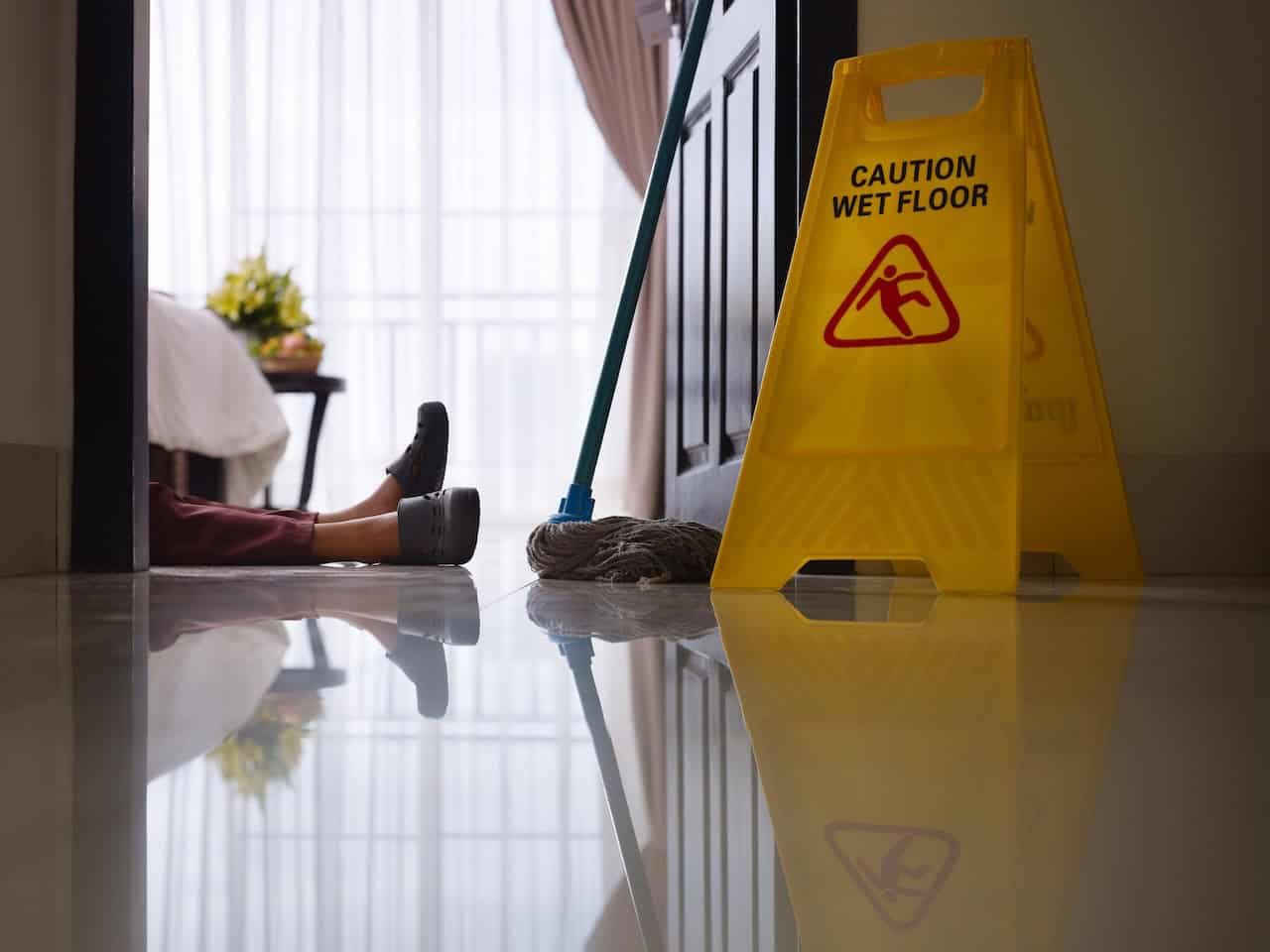
- Wet or Slippery Surfaces: The most common cause is the presence of wet or slippery surfaces, such as freshly mopped floors, spills, or wet outdoor areas due to rain or snow.
- Spills and Leaks: Accidental spills of liquids or substances in areas like supermarkets, restaurants, or workplaces can create slippery surfaces that pose a risk for slip and fall incidents.
- Inadequate Floor Matting: Lack of or improperly placed floor mats at entrances may result in individuals bringing moisture indoors, contributing to slippery conditions.
- Waxed or Polished Floors: Surfaces that have been recently waxed or polished can become slick, posing a hazard for individuals walking on them.
- Oily or Greasy Surfaces: Spills or leaks of oils, greases, or other lubricants in industrial or commercial settings can create slippery surfaces that increase the risk of slip and fall accidents.
- Improper Footwear: Inappropriate footwear, such as shoes with worn-out soles or high heels, can contribute to slips and falls, especially on smooth or slippery surfaces.
- Negligence in Cleaning: Inadequate cleaning practices or failure to promptly address spills and messes can result in slippery conditions that contribute to slip and fall accidents.
- Unmarked Hazards: Failure to provide warning signs for wet or recently cleaned areas may leave individuals unaware of potential slip hazards.
- Inadequate Lighting: Poorly lit areas can obscure potential hazards, making it difficult for individuals to detect wet or slippery surfaces.
- Staircases without Anti-Slip Measures: Staircases lacking anti-slip measures, such as traction strips or non-slip coatings, can lead to slip and fall related injuries.
- Rainwater Inside Buildings: Failure to address leaks or water ingress during rainy weather may result in wet indoor surfaces, leading to slip and fall accidents.
- Improperly Maintained Outdoor Walkways: Uneven or poorly maintained outdoor walkways, including sidewalks and pathways, can accumulate water or become slippery due to weather conditions, contributing to slip and fall accidents.
- Debris on Walking Surfaces: Objects or debris left on walking surfaces, both indoors and outdoors, can create tripping hazards and increase the risk of slips and falls.
- Lack of Slip-Resistant Flooring: Areas with flooring materials that lack slip-resistant properties, especially in high-traffic zones, can pose a greater risk of slip and fall incidents.
- Foot Traffic in Transition Areas: Areas with heavy foot traffic, such as entrances and exits, can experience increased moisture or spills, heightening the risk of slips and falls.
Common Sites in Florida Where Trip and Fall vs. Slip and Fall Accidents Occur
Trip and Fall Accident Sites
According to experienced fall injury attorneys, Florida, with its diverse landscapes and environments, presents a range of locations where severe injuries may result from a trip and fall.
- Supermarkets and Grocery Stores: Aisles with spills, uneven flooring, or misplaced items can contribute to trip and fall accidents in supermarkets and grocery stores.
- Restaurants and Cafes: Spills, uneven flooring, or poorly lit areas in dining establishments can contribute to trip and fall accidents for patrons and staff.
- Hotels and Resorts: Slippery pool areas, uneven pathways, or inadequate lighting around hotel and resort facilities can be potential sites for trip and fall accidents.
- Sidewalks and Pedestrian Walkways: Uneven pavement, cracks, or poorly maintained sidewalks in urban and suburban areas can contribute to trip and fall incidents.
- Public Parks and Recreational Areas: Uneven terrain, tree roots, or poorly maintained pathways in parks and recreational areas can pose tripping hazards.
- Public Transportation Stations: Train platforms, bus stops, or transit station areas with uneven flooring or inadequate maintenance can be sites for trip and fall accidents.
- Construction Sites: Construction zones with uneven ground, debris, or unsecured materials can pose risks for workers and passersby.
- Healthcare Facilities: Hospitals and clinics may have areas with spills, cords, or uneven flooring that can contribute to trip and fall accidents.
Slip and Fall Accidents Sites
Slip and fall accidents can occur in various settings. A seasoned fall injury lawyer in Florida would be able to identify certain locations that are more prone to such incidents.
- Shopping Malls and Retail Stores: Recently mopped or waxed floors, spills in food courts or restrooms, or wet entryways during rainy weather can create slippery conditions.
- Restaurants and Cafes: Kitchen areas with spills, dining areas with wet floors, or bathrooms with recently cleaned surfaces can pose slip hazards in dining establishments.
- Parking Lots and Garages: Puddles, spills, or oil leaks in parking lots and garages, especially during or after rain, can create slippery conditions.
- Beaches and Coastal Areas: Sandy or wet surfaces, as well as slippery boardwalks or pathways, can contribute to slip and fall accidents in beach areas.
- Senior Living Facilities: Common areas with recently cleaned floors, wet spots, or improperly maintained surfaces can pose slip hazards in senior living facilities.
- Public Schools and Universities: Hallways, entryways, and common areas on educational campuses can pose slip hazards due to spills or recently cleaned surfaces.
- Residential Areas: Entryways, patios, or walkways in residential areas with poor drainage or maintenance may become slippery, especially during rainy weather.
- Amusement Parks and Attractions: Water ride areas, wet walkways, or recently cleaned surfaces in amusement parks can contribute to slip and fall incidents.
- Outdoor Events and Festivals: Rain-soaked grounds, spilled beverages, or poorly maintained surfaces in outdoor event spaces can pose slip hazards.
- Workplaces and Industrial Sites: Work areas with spills, oil leaks, or wet surfaces, particularly in industrial settings, can be sites for slip and fall accidents.
Construction Site Hazards Leading to Trip and Fall vs. Slip and Fall Accidents
Trip and Fall Hazards on Construction Sites
Construction sites are inherently hazardous environments, and numerous factors can contribute to trip and fall accidents
- Changes in Elevation: Sudden changes in elevation, such as steps, ramps, or raised platforms, can pose tripping hazards if not properly marked or secured.
- Construction Debris: Materials, tools, and debris left scattered around the construction site can create obstacles and trip hazards for workers.
- Exposed Cables and Wires: Electrical cables, extension cords, or other wiring left exposed on the ground can lead to trips and falls.
- Unsecured Tools and Equipment: Tools and equipment that are not properly stored or secured can become trip hazards for workers moving around the construction site.
- Holes and Excavations: Unprotected holes, trenches, or excavations without proper barriers or warning signs can pose significant tripping hazards.
- Lack of Warning Signs: Failure to place warning signs for potential hazards, such as uneven surfaces or changes in elevation, can contribute to accidents.
- Lack of Personal Protective Equipment (PPE): Failure to provide or use appropriate PPE, including slip-resistant footwear, can contribute to slip and fall accidents.
Slip and Fall Hazards on Construction Sites
Construction sites in Florida pose significant risks for slip and fall accidents, especially from heights.
- Unprotected Edges and Openings: Unprotected edges of elevated surfaces, such as floors, roofs, or platforms, can pose a significant risk for slip and fall accidents.
- Lack of Guardrails: Absence or inadequate installation of guardrails on elevated surfaces increases the risk of workers slipping and falling.
- Unstable Scaffolding: Improperly erected or unstable scaffolding can lead to slips and falls, especially if the surface is slippery or uneven.
- Wet or Slippery Surfaces: Wet or slippery surfaces on elevated platforms, walkways, or stairs can contribute to slip and fall accidents from heights.
- Poorly Maintained Ladders: Ladders with defects, such as missing rungs or damaged steps, can lead to slips and falls when workers climb or descend.
- Inadequate Fall Protection Systems: Failure to provide and use appropriate fall protection systems, such as safety nets, lifelines, or personal fall arrest systems, increases the risk of falls.
- Unprotected Skylights or Roof Openings: Skylights or openings in roofs without proper protective measures can pose a serious risk for slips and falls from heights.

Types of Liable Parties in Trip and Fall vs. Slip and Fall Accidents in Florida
Trip and Fall Liable Parties
It is important to identify the at-fault parties that contributed to your trip and fall accident, resulting in your medical expenses, income loss, and pain and suffering.
Property Owner: Property owners are often considered the primary responsible party. They have a duty to maintain their premises in a reasonably safe condition for visitors.
Property Manager: If the property is managed by a third party, such as a property management company, they may share liability for ensuring the property’s safety.
Business Operators: In commercial establishments, the business operators or tenants may be held responsible for maintaining safe conditions for customers and visitors.
Homeowners Associations: In communities with homeowners associations (HOAs), the association may share liability for common areas or sidewalks if they are responsible for maintenance.
Contractors and Service Providers: Outside contractors or service providers engaged for specific tasks may be liable if their work contributes to hazardous conditions leading to a trip and fall.
Security Companies: If a security company is responsible for maintaining the safety of a property, they may be held liable for negligence if their actions or inactions contribute to accidents.
Event Organizers: In cases of events or gatherings, the organizers may be liable for ensuring the safety of attendees and addressing any hazards.
Slip and Fall Liable Parties
If your slip and fall accident and injury led you to seek medical treatment, you may be able to hold one or more of the following parties liable, depending on the circumstances of your case.
Retailers and Store Owners: Retailers and store owners have a responsibility to keep their premises safe for customers. They may be held liable for hazards leading to slip and fall accidents.
Government Entities: Public places maintained by government entities, such as sidewalks or public buildings, may hold the government liable for slip and fall accidents resulting from negligence.
Maintenance Companies: Companies hired to perform maintenance, cleaning, or repairs on the property may be held liable if their negligence contributes to the slip and fall.
Contractors and Construction Companies: If construction or renovation work is ongoing, contractors and construction companies may be liable for creating or failing to address unsafe conditions.
Educational Institutions: Schools and educational institutions have a duty to maintain safe premises, and they may be held liable for slip and fall accidents on their property.
Nonprofit Organizations: Organizations hosting events or activities on their premises may be held liable for injuries resulting from slip and fall accidents.
Contractors and Service Providers: Outside contractors or service providers engaged for specific tasks may be liable if their work contributes to hazardous conditions leading to a slip and fall.
Maximize Your Compensation with Our Experienced Slip, Trip, and Fall Attorneys in Florida
Slip, trip, and fall injuries can result in mounting medical bills, loss of income, and prolonged pain and suffering. If a fall accident occurs due to another’s fault, the dedicated slip and fall accident lawyers at The Law Offices of Scott J. Senft will do what it takes to establish liability of the negligent parties and achieve the maximum compensation you deserve. Give us a call at 954-329-0137 or fill out this online form to schedule your free consultation.