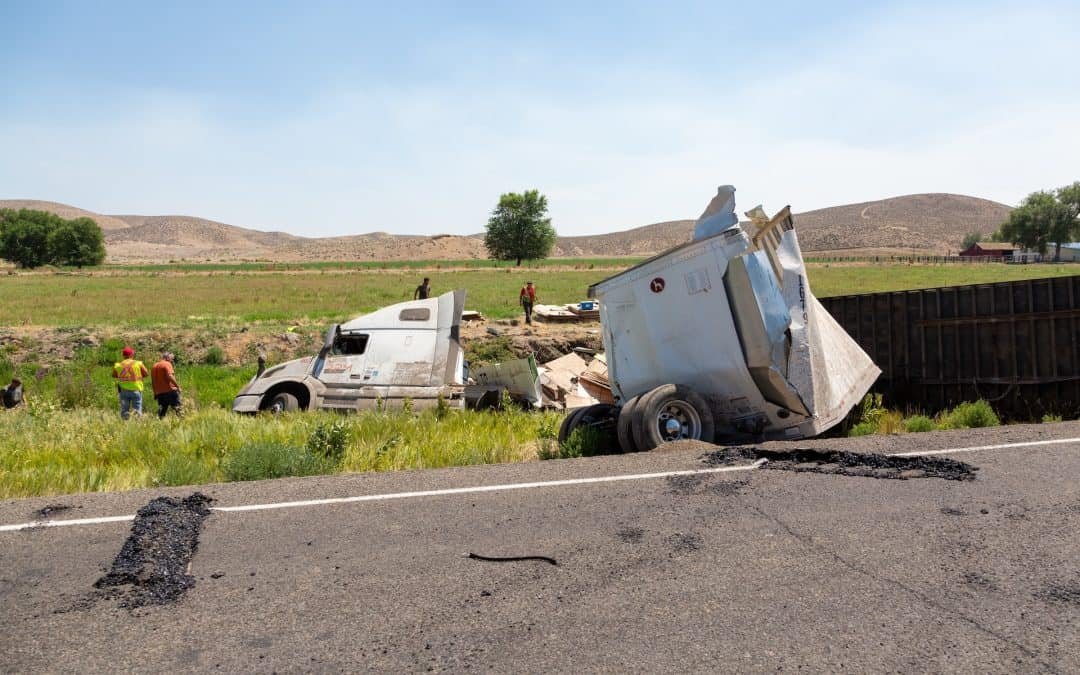
Average Truck Accident Settlement: Real Case Examples and What You Can Expect

Average Truck Accident Settlement: Real Case Examples and What You Can Expect

Average Truck Accident Settlement

Discover What Influences the Average Truck Accident Settlement. Learn From Real Case Studies with Payouts Up To $1 Billion. Free Consultation Available!

Comprehensive Compensation Insights

Empower Yourself with Knowledge

Explore our in-depth resources to better understand your legal options and protections under tort law.

In 2022, there were 4,764 fatalities resulting from large truck crashes. Of these deaths, 17% were truck occupants, 66% were occupants of cars and other passenger vehicles, and 16% were pedestrians, bicyclists, or motorcyclists. Victims and their loved ones suffer greatly due to another’s negligence. Such incidents impact one’s physical, financial, psychological, and emotional well-being. Thus, it is only fair that the affected parties receive every dime of compensation available under the law. Truck accidents, in particular, are incredibly daunting as multiple parties are typically involved and the severity of the impact tends to be greater than that of a car accident. Those who have been injured in a truck accident, that was not their fault, should seek legal counsel as soon as possible. Truck accident lawyers have the experience, expertise, and skill to maximize your compensation.  

What’s The Average Truck Accident Settlement?

Truck accident settlements in Florida typically range from $150,000 to $1 million, but the final amount depends on the unique circumstances of your case. Factors like the severity of injuries, the impact on your earning capacity, and the insurance limits of the defendant play significant roles in determining compensation. Florida’s modified comparative negligence law also affects the payout, as compensation can be reduced based on the victim’s degree of fault. Rather than relying on settlement calculators, it’s important to consult a truck accident attorney who can evaluate the specifics of your case, assess potential damages, and provide a more accurate estimate of what your settlement could be. Below, we explore the key factors that influence compensation and provide real case studies to illustrate how these variables affect outcomes. 

Factors Affecting The Average Truck Accident Settlement

Degree of Fault

In Florida, the comparative negligence system (Florida Statute §768.81) applies, meaning compensation is reduced based on your percentage of fault. Studies show that in Florida, plaintiffs who are found partially at fault still recover significant compensation—on average, 90% of their total damages, depending on the case. However, compensation is barred if the plaintiff’s fault exceeds 51%, so it’s vital to have an attorney assess and argue against unfair claims of shared liability. 

Severity of Injuries

Serious injuries, such as traumatic brain injuries, spinal cord damage, or amputations, lead to higher compensation due to the lifelong costs of medical care, rehabilitation, and reduced quality of life. According to the National Safety Council, the average economic cost of a disabling motor vehicle injury in 2022 was $162,000, while the comprehensive cost—which includes lost quality of life—was estimated at $1,066,000. These figures highlight the significant financial impact of such injuries, making truck accident claims particularly significant in terms of compensation. 

Lost Wages

Injuries that lead to reduced earning capacity or require the victim to take a lower-paying job can drastically increase compensation. For example, if a victim can no longer work as a manual laborer due to injuries and must take a sedentary job with lower pay, they can claim compensation for future lost earnings. Calculating future wages involves looking at the victim’s age, occupation, and potential for future promotions or raises. 

ADDITIONAL CONSIDERATIONS

Liability | Who Is Responsible?

Liability in truck accidents is often complex, as multiple parties can share responsibility. Trucking companies are typically liable under vicarious liability (Florida Statute §440.11). If the driver is working, and company negligence is present, such as improper vehicle maintenance or insufficient training, the company’s liability is increased. However, the truck driver may also be held personally accountable for reckless actions like speeding or driving under the influence, with Florida’s comparative negligence law allowing fault to be apportioned among all responsible parties. In some cases, third-party maintenance companies may be liable if poor servicing or mechanical failures caused the accident. When defective parts, such as faulty brakes, are involved, manufacturers may share liability under product liability laws. For rental trucks like U-Haul, liability depends on the rental agreement and insurance coverage, which both the renter and rental company must verify. Finally, government entities may be held partially responsible if the accident was due to poor road conditions or faulty design, although claims against the government must meet specific legal criteria under sovereign immunity laws. 

Insurance Coverage 

Truck companies typically carry higher insurance coverage than personal vehicles, with minimum federal requirements under 49 CFR § 387.9. Florida laws set regulations on insurance requirements based on vehicle weight. For example, trucks weighing more than 44,000 pounds must have a minimum of $300,000 in coverage. However, many trucking companies have policies well above this, reaching into the millions. The key to securing a full payout lies in understanding how these policies interact with personal injury laws, as multiple insurance policies may be involved. 

Average Truck Accident Settlements: Case Studies 

FedEx Rear-End Collision – $8 Million Verdict

In 2014, a woman driving on I-95 in Nevada was rear-ended by a FedEx truck that failed to brake in time. The impact caused her severe back and neck injuries, leading to ongoing medical treatment and pain management over several years. FedEx admitted liability for the crash but contested the extent of the woman’s injuries, arguing that they were largely due to a second car accident months later. Despite multiple settlement attempts, FedEx refused to offer more than $1.8 million. The case proceeded to trial, where a jury awarded the woman $8 million, with $5 million designated for future medical care. This case highlights the importance of thorough medical documentation and expert testimony in obtaining fair compensation for long-term injuries. 

Wabash National Rear-Impact Guard Case – $462 Million Verdict

In 2024, a Missouri jury delivered a landmark verdict against Wabash National, a truck trailer manufacturer, holding them accountable for a fatal underride crash that occurred in 2019. The case revolved around a collision where a car crashed into the back of a Wabash-manufactured trailer, resulting in the deaths of two occupants. The victims’ families were awarded $6 million each in compensatory damages, while an additional $450 million was levied in punitive damages against Wabash to send a message to the industry about prioritizing safety over cost-saving. The evidence demonstrated that this was a defective product case; specifically, design failure since Wabash continued using outdated technology despite knowing safer alternatives existed. Both wrongful death and product liability contributed significantly to the settlement awarded.  

Clarke County Semi-Truck Case – $160 Million Verdict

In 2024, a Clarke County jury in Alabama awarded $160 million to Leonard Street, a truck driver who sustained a neck fracture when his semi-truck rolled over on Highway 84 after a pickup truck pulled out in front of him. Street’s injuries were exacerbated by the defective design of the truck’s cab and seat, which dated back to 1995. His attorneys argued that the lack of an automatic pull-down safety seat and the weak structural integrity of the cab roof were critical factors in the severity of his injuries. The jury awarded $75 million in punitive damages, aiming to push the trucking industry toward safer design practices, and an additional $75 million in compensatory damages to Leonard Street. His wife was also awarded $10 million for her role in caring for her husband post-accident. This case could have a far-reaching impact, potentially influencing the adoption of stronger safety regulations for truck cabs and seats. 

2021’s Record-Breaking $1 Billion Trucking Verdict

In 2021, a Florida jury rendered a record-breaking $1 billion verdict against two trucking companies, Kahkashan Transportation Inc. and AJD Business Services Inc., in a wrongful death case. The verdict included $100 million awarded to the parents of an 18-year-old decedent for pain and suffering, and $900 million in punitive damages for negligent hiring and retention of an unlicensed driver by AJD. 

The accident occurred when an AJD truck driver, who was on his phone and over the legal driving hours, caused a crash by flipping his truck on the highway. An hour later, a Kahkashan driver collided with the stopped traffic, killing the 18-year-old. Notably, the Kahkashan driver was found to have been driving on cruise control and only attempted to brake one second before impact, as recorded by his truck’s data. 

$42 Million Verdict: A Tragic Underride Accident

In 2015, 16-year-old Riley Hein tragically died in a side underride accident on a New Mexico interstate. His car veered off the road and lodged underneath a trailer manufactured by Utility Manufacturing Company, dragged for half a mile until it caught fire. The accident was a result of the trailer lacking side underride guards, which could have prevented the car from sliding beneath the truck. 

In August 2019, a New Mexico jury awarded Hein’s family $42 million in a lawsuit against the trucking company, Barkandhi Express, and the manufacturer. The jury found both companies negligent for failing to equip the trailer with side underride guards, a safety feature not yet required but recognized for preventing fatal underride accidents. 

FedEx Wrongful Death Case – $32 Million for Each Victim

In 2011, a tragic collision involving a FedEx truck resulted in the deaths of Marialy Morga and her 4-year-old daughter, Ylairam, on a highway in New Mexico. The crash occurred when a FedEx semi-truck, traveling at 65 miles per hour, collided with the back of Marialy’s slow-moving pickup truck without any attempt to brake. The impact claimed the lives of Marialy, Ylairam, and the FedEx driver, Elizabeth Quintana, while critically injuring Marialy’s young son, Yahir. 

In total, the jury awarded more than $165 million in damages, with $32 million each awarded for the wrongful deaths of Marialy and Ylairam. This case stands as a significant example of how wrongful death claims involving commercial trucks can lead to substantial compensation, especially when multiple parties are involved and negligence is clear. 

Florida auto accident law team

Get Your Free Consultation Today

When you’re facing the aftermath of a truck accident, you deserve a legal team that understands the complexities of your case and fights for the compensation you’re entitled to. At The Law Offices of Scott J. Senft, we’ve successfully secured multi-million-dollar settlements for clients like you, navigating the intricacies of Florida’s trucking laws and federal regulations. You’ll receive personalized attention, expert representation, and peace of mind knowing that you don’t pay unless we win your case. Take advantage of our free consultation to discuss your options and let us handle the legal complexities, so you can focus on your recovery and rebuilding your life. 

How to Win Big in Walmart Slip and Fall Cases: Settlements, Negligence, and Compensation

How to Win Big in Walmart Slip and Fall Cases: Settlements, Negligence, and Compensation

Slip and Fall Accidents at Walmart

Learn How To Claim Compensation For A Slip and Fall Injury. Understand Premises Liability Laws & The Importance Of Consulting A Personal Injury Lawyer.

Comprehensive Tort Law Insights

Empower Yourself with Knowledge

Explore our in-depth resources to better understand your legal options and protections under tort law.

Frequently Asked Questions

How Much Money Does Walmart Pay for Slip and Fall Accidents?

For a slip and fall at Walmart, the average compensation may range from $100,000 to $1 million or more. Settlement amounts depend on the severity of the injury, the circumstances of the fall, amongst many other legal considerations.  If you’ve suffered a slip and fall at Walmart, this blog covers everything you need to know to attaining a  favorable outcome: from proving negligence to case studies. 

How Will the Value of My Walmart Slip and Fall Claim Be Determined?

Key elements that determine the value of a slip and fall claim include medical expenses, punitive damages, negligence and premise liability, pain and suffering, quality of evidence, and lost wages. Determining the value of your Walmart slip and fall claim involves a comprehensive assessment of various factors that impact the compensation you might receive. With the right personal injury attorney, evidence will be leveraged to maximize payouts.

Medical Expenses

Medical expense is one of the most important factors. It includes all the medical costs associated with the injury like emergency room visits, surgery, physical therapy, ongoing treatments, and future care needs. More catastrophic, long-lasting injuries result in a higher settlement. For instance, a spinal injury leading to chronic pain or a head injury with lasting cognitive effects is be valued higher than a minor, short-term injury. Keep all receipts and detailed records of every treatment.

Punitive Damages

To receive punitive damages one must prove that “intentional misconduct” or “gross negligence” occurred. “Intentional misconduct” implies that Walmart knew their behavior was wrong or dangerous and likely to cause injury. “Gross negligence” refers to reckless or careless behavior showing a disregard for life, safety, and the rights of others. An example of this is if Walmart repeatedly ignored maintenance requests to repair a broken handrail, leading to a someone’s injury.

Liability and Negligence

The strength of accident claims largely depends on proving that Walmart was negligent. This could be due to wet floors without warning signs, poor lighting, or any condition that Walmart did not address. 

Comparative Negligence 

Florida follows a modified comparative negligence system. Under this rule, compensation is reduced by your degree of fault.

Pain and Suffering

Pain and Suffering is more subjective and varies significantly between cases. It refers to the physical pain and emotional distress suffered due to the injury. This is usually calculated based on the severity and duration of the pain. 

Quality of Evidence

Compensation in slip and fall cases is closely tied to the quality and quantity of evidence supporting your claims of injury and store negligence. For instance, medical records detail the extent of your injuries, while surveillance footage or witness statements can demonstrate the store’s negligence.

Lost Wages

If your injury results in missed work or reduces your future earning ability, you can quantify and claim these losses. It’s essential to provide documentation from both your employer and healthcare professionals detailing how the injury impacts on your ability to work. 

How to Prove Walmart Was Negligent in My Slip and Fall Accident?

Proving negligence in a Walmart slip and fall accident typically involves proving that Walmart had a duty to maintain safe premises, that they breached that duty by not maintaining a hazard-free environment, and that this breach is the direct cause of your injury. To prove that Walmart’s negligence was the cause of your accident, and consequent injury, by minimum, you must document the hazardous conditions that caused the accident, such as wet floors or debris, and demonstrate that Walmart either knew or should have known about the hazardous conditions but failed to address it. Thus, gathering witness statements, surveillance footage, incident reports, and medical records is crucial for building a case. Nonetheless, navigating the legal complexities associated with proving negligence is challenging without professional help. Therefore, it’s recommended that one seeks guidance from a skilled Florida slip and fall lawyer who will navigate legal procedures and advocate for your rights effectively. 

Walmart Slip and Fall Settlements and Verdicts

Recent cases involving slip and fall at Walmart illustrate how and why substantial settlements are awarded to plaintiffs who have suffered injuries due to Walmart’s negligent acts – a refreshing outcome in a society full of large corporations. The success of these cases showcases the importance of seeking legal counsel to navigate complex personal injury claims against powerful corporations to maximize your compensation. 

Walker v Wal-Mart Stores, Inc. 2015

Army veteran Henry Walker experienced a life-altering slip and fall at Walmart. While reaching for a watermelon, he tripped and his foot got stuck in a wooden pallet, resulting in a severe hip injury. The jury found Walmart negligent, because security footage showed similar accidents involving other customers. This contributed to the substantial $7.5 million verdict, which included punitive damages because of the lifelong impact on Walker’s daily activities. 

Establishing Duty, Breach, and Causation 

Walmart had a duty to maintain safe conditions for customers, which included ensuring that obstacles like the wooden pallet were not hazardous. The breach of this duty was evidenced by the recurring incidents shown in the security footage, demonstrating a failure to address and prevent such hazards. The video footage also clearly demonstrated that Walker’s shattered hp bone was directly caused by his foot getting stuck in the wooden pallet which led to his fall.  

Wynn v Wal-Mart Stores East LP 2015

Dorothy Wynn, a 74-year-old woman, secured a $1 million verdict against Walmart for injuries sustained from tripping over a crack in the store’s parking lot. Despite Walmart’s defense, which included surveillance video suggesting Wynn walked normally post-fall, the Orange County jury acknowledged the severity of her ankle injuries and how they would change her living standard.  


Establishing Duty, Breach, and Causation 


Walmart had a duty to maintain safe premises for its customers, including the parking lot where Wynn tripped. The breach of this duty occurred due to Walmart’s failure to repair or warn about the crack in the parking lot, which led to Wynn’s ankle injury.  

Watts v Wal-Mart Stores East LP 2018

Linda Watts slipped on a floor mat in a puddle of liquid at a Walmart cash register in Woodstock. This resulted in a debilitating arm injury, including a torn rotator cuff and dislocated shoulder. A federal jury awarded her more than $1.4 million, including $200,000 for attorney fees, after concluding that Walmart had raised a weak defense. 


Establishing Duty, Breach, and Causation 

Walmart had a duty to promptly address and clean spills to prevent slip and fall accidents like the one that caused Linda Watts to injury her arm. The breach of this duty was evident as Walmart failed to adequately maintain the area around the cash register, leading to the hazardous condition that caused Watts to slip.  

Wal-Mart Stores Tex., LLC v. Bishop 2018

Dawn Bishop pursued a Walmart personal injury claim after she had a heavy box fall on her head while browsing the store, resulting in a cervical strain and traumatic brain injury. Despite extensive medical treatments, she continued to suffer pain. The accident was attributed to a cashier’s negligence, who was stacking shelves without proper training. The jury awarded Bishop $1.39 million to reflect Walmart’s liability in ensuring the safety of its merchandise placement. 


Establishing Duty, Breach, and Causation 

Walmart had a duty to ensure safe merchandise placement and adequately train its employees in stacking procedures to prevent accidents. The breach of this duty occurred due to the cashier’s negligent actions in improperly stacking shelves, which directly led to the heavy box falling and injuring Bishop. The causation was evident as Bishop’s injuries were a direct result of the box falling on her head, underscoring Walmart’s negligence in maintaining proper safety protocols for its employees and customers. 

Going Toe-To-Toe With Insurance Companies

Fighting Against Walmart's Insurance

Walmart handles its slip-and-fall claims differently from many other businesses because it is self-insured. This means Walmart uses Walmart Insurance Services, LLC, to manage liability claims, rather than relying on a third-party insurer. As a result, Walmart is particularly assertive in defending against slip-and-fall claims, since it directly impacts their financial bottom line. 

Walmart’s self-insurance strategy involves investigation and robust defense tactics to minimize financial liability. They employ a dedicated team of legal experts who meticulously analyze each claim, often looking for ways to reduce or deny payouts. This team will scrutinize every detail of the incident, from the store conditions to the behavior of the injured party like in the Dorthy Wynn case. They may use surveillance footage, employee testimonies, and maintenance records to dispute the claim. 

Florida auto accident law team

Get Your Free Consultation Today

When you’re fighting for the compensation you deserve, having skilled legal representation on your side is essential. With the right slip and fall attorney, you can receive expert guidance, gather the necessary evidence, and negotiate settlements. If needed, your attorney will litigate in court to secure fair compensation for your injuries. The complexities of personal injury law can be overwhelming, but an experienced attorney knows how to predict Walmart’s defense strategies, increasing your chances of a favorable outcome. Don’t face Walmart alone—having top-tier legal representation gives you the best shot at a successful claim.

Securing Compensation For A Slip and Fall Injury

Securing Compensation For A Slip and Fall Injury

Slip and Fall Injury: Laws and Compensation

Learn how to navigate the complexities of premise liability and secure the compensation you deserve for your slip and fall injury.

Introduction

Understanding Your Rights

A slip and fall injury is a common type of personal injury that occurs when an individual trips and falls on someone else’s property. These accidents frequently happen in public spaces like supermarkets, restaurants, and banks. Slip and fall accidents can lead to significant injuries, making it crucial for property owners to maintain a safe environment for visitors.

What is Premise Liability?

Premises liability is a legal concept that holds property owners accountable for accidents and injuries that occur on their property. Under personal injury law, if there is a hazard on the property and the owners are aware of it but fail to address it, they can be held liable for the damages.  a Walmart customer, Linda Watts, slipped on a floor mat in a puddle of liquid at a Walmart cash register in Woodstock. This resulted in an arm injury and dislocated shoulder. Walmart failed to maintain safe premises, which resulted in a customer being severely injured. A federal jury awarded her more than $1.4 million for her Walmart slip and fall claim.  This case serves as an example of premises liability, where the property owner or occupier is deemed negligent for failing to address hazardous conditions that caused harm to others.

Seeking Compensation in a Slip and Fall Injury

Slip and fall accidents can lead to serious injuries and significant financial burdens. Seeking compensation for such incidents requires a thorough understanding of legal concepts such as duty, breach, and causation. These elements form the backbone of a successful personal injury claim, ensuring that property owners are held accountable for their negligence. In the following discussion, we will explore how each of these components plays a crucial role in proving liability and securing compensation for those who have suffered a slip and fall injury.


Elements of Negligence

Duty of Care

In slip and fall cases, establishing the property owner’s duty of care is the first critical step in seeking compensation. Property owners, whether they manage a private residence, commercial establishment, or public space, have a legal obligation to maintain a safe environment for visitors. This duty requires them to inspect the premises, address any hazardous conditions, and provide warnings of potential dangers that cannot be immediately fixed. Demonstrating that a duty of care existed is foundational to building a successful slip and fall case, as it sets the stage for proving that the owner had a responsibility to prevent the accident.

Duty Breached

The next step involves proving that the property owner breached this duty of care. To establish a breach, it must be shown that the owner knew or should have known about the dangerous condition and failed to act. This could include not repairing a broken step, not cleaning a spill, or failing to install lighting in a dimly lit area. Evidence such as maintenance logs, witness testimonies, and surveillance footage can be crucial in demonstrating the owner’s negligence. The key argument is that the owner’s inaction violated their obligation to keep the premises safe, thereby creating the conditions that led to the slip and fall accident.

Causation

Causation must be established to link the breach of duty directly to the injuries sustained. It needs to be proven that the hazardous condition was the cause of the accident and that the injuries would not have occurred but for the owner’s negligence. Medical records, accident reports, and expert testimonies can play a significant role in demonstrating causation. The plaintiff must show a clear and direct connection between the owner’s failure to address the dangerous condition and the harm suffered.

Commercial vs. Residential: Slip and Fall Injuries

What is the Statute of Limitations for Slip and Fall?

When seeking compensation for a slip and fall injury, whether in a commercial or residential setting, there are distinct considerations to acknowledge. In commercial premises like supermarkets or restaurants, there is typically a higher standard of care expected from owners to ensure safety. This includes regular inspections, prompt hazard remediation, and warning signage. In residential settings, the duty of care owed by homeowners is limited, often requiring proof of negligence or failure to address known hazards. Whether your slip and fall occurred in a commercial or residential area you should still consult with a slip and fall lawyer to find out if you can seek compensation.

The statute of limitations for slip and fall cases is generally two years from the injury. The statute of limitations sets the time limit within which a lawsuit can be filed after an injury. If you are uncertain whether you can still pursue compensation for a slip and fall incident, consulting with a personal injury lawyer is advisable. They can provide guidance based on the specific circumstances of your case and the laws applicable in your area.

What Types of Damages Can I Recover from My Slip and Fall Injury?


The damages you can recover after a slip and fall can include medical expenses, lost wages, pain and suffering, and in some cases, punitive damages. In the aftermath of a slip and fall injury, understanding the types of damages you can recover is crucial for securing appropriate compensation. Victims may be entitled to various forms of economic and non-economic damages, each addressing different aspects of the harm suffered. By comprehensively documenting and pursuing these claims, you can ensure that your financial and emotional burdens are addressed following the incident. Below are the types of damages you can recover from a slip and fall accident.

Medical Expenses

This includes compensation for past, current, and future medical bills related to the treatment of injuries sustained in the accident. It covers hospital stays, surgeries, doctor visits, physical therapy, medication, and medical equipment.

Lost Wages

If your injuries prevent you from working, you can recover compensation for lost income. This includes not only the wages lost during the recovery period but also any future earnings you may be unable to earn due to long-term or permanent disabilities.

Pain & Suffering

Non-economic damages such as pain and suffering address the physical pain and emotional distress caused by the accident. This can include compensation for chronic pain, anxiety, depression, and other psychological impacts resulting from the injury.

Punitive Damages

In cases where the property owner’s conduct was particularly reckless, the court may award punitive damages. These are intended to punish the wrongdoer and deter similar conduct in the future.

Understanding Premise Liability

Are the Owners Liable if a Trespasser Slips and Falls on Their Property?

slip and fall injury while trespassing

Landowners are not obligated to maintain their property in a safe condition for trespassers, according to Florida Statute 768.075. A trespasser is an individual who enters another person’s property without permission, invitation, or consent. In the context of slip and fall accidents, the legal responsibilities of property owners towards trespassers differ from those owed to invited guests. This means property owners are not required to remove hazards or warn trespassers about potential dangers to their property.

However, property owners are not permitted to intentionally cause harm to trespassers. While they do not have to keep their property hazard-free for uninvited individuals, they also cannot set traps or create dangerous conditions specifically to injure trespassers. This is known as the duty to refrain from willful and wanton misconduct. For example, setting a hidden pitfall or placing sharp objects where a trespasser might walk would be illegal.

Steps to Seek Compensation

Filing a Claim for a Slip and Fall Injury

If you have experienced a slip and fall accident, understanding your right to seek compensation is crucial. Property owners are legally obligated to maintain safe premises for visitors, excluding trespassers. If a property owner’s negligence in addressing a hazardous condition caused your slip and fall injury, you may be eligible for compensation. Determining duty of care, breach of duty, and causation can be complex alone. Slip and fall lawyers handle such cases regularly and know how to establish owner negligence. With legal assistance, you can navigate the claims process effectively—from negotiating with insurers to securing maximum compensation for your injuries. Do not hesitate to contact an experienced personal injury lawyer to assist with your claim today.

Compensation for Burn Accidents: Hiring a Personal Injury Lawyer

Compensation for Burn Accidents: Hiring a Personal Injury Lawyer

Burn victims often endure profound physical and emotional challenges that significantly alter their lives. Burn accidents can be life-changing events, impacting not only the individual’s health but also their self-image, relationships, and daily functioning. The road to recovery is often long and painful, involving extensive medical treatment, rehabilitation, and psychological support. Beyond the physical scars, burn survivors may face chronic pain, mobility issues, and the need for ongoing care. If someone has experienced a burn due to another party’s negligence, then they could be entitled to compensation.


Types of Burns

Burns are injuries to the skin caused by heat, electricity, chemicals, or radiation. They are categorized into degrees based on their severity and depth of tissue damage.

  • First-Degree Burns: These are minor burns affecting only the outer layer of the skin. They typically cause redness, pain, and swelling, like a sunburn. Healing usually occurs within a few days.
  • Second-Degree Burns: These burns affect both the outer layer of the skin and the underlying layer. They cause blisters, severe pain, redness, and swelling. Healing may take several weeks.
  • Third-Degree Burns: These are severe burns that reach deeper tissues like muscles and bones. The skin may appear white, charred, or leathery. These burns cause numbness due to nerve damage and require medical attention.


girl who suffered a burn accident; getting hand wrapped by doctor


Who is Liable in a Burn Accidents?

Liability in a burn accident depends on the circumstances surrounding where, how, and why the burn happened. If you have suffered a burn injury due to someone else’s careless actions, you may have the right to seek legal action against them. To do so, you must prove that another party was responsible for your burn injury. A burn accident lawyer can be instrumental in this process and establishing the where, how, and why the burn happened.


How a Burn Happened

Burn accidents can occur when you are in contact with flames, hot surfaces, scalding liquids, chemicals, or electricity. To seek compensation for a burn injury, it is crucial to demonstrate how the burn occurred and establish the negligence of the responsible party. For example, if a factory worker suffers chemical burns due to improper labeling and storage of hazardous materials, they must provide evidence of these unsafe conditions. This might include witness statements, safety reports, and pictures of the workplace. By showing that the employer failed to provide a safe working environment, the injured worker can prove negligence and seek compensation for medical bills, rehabilitation costs, and lost wages.


Where a Burn Happened

The location of a burn incident is often crucial in determining liability. For example, consider a customer who suffers severe burns from hot coffee at a café due to a defective lid that the owner knew about but failed to replace. If the injured customer can prove that the burn happened because of the owner’s negligence in maintaining safe conditions, they may be entitled to compensation. This could involve presenting evidence such as maintenance records, prior complaints about the lids, and expert testimony. Property owners must ensure that their premises are free from hazards to prevent such accidents and avoid legal consequences.


Why a Burn Happened

Understanding why a burn happened is key to proving negligence and securing compensation. This involves identifying the root cause and showing that the responsible party’s actions or inactions directly led to the injury. For example, Stella Liebeck sued McDonald’s after suffering severe burns from their excessively hot coffee, which caused third-degree burns in seconds through clothes. During the trial, jurors saw photos of her injuries and heard that McDonald’s coffee was much hotter than industry standards, causing numerous prior injuries. Despite knowing the risks, McDonald’s kept serving coffee at dangerously high temperatures.


Examples of Burns Due to Negligence


Thermal Burns

  • Description: Caused by contact with hot objects, such as flames, hot metals, scalding liquids, or steam.
  • Compensation: If a thermal burn is the result of someone’s negligence, such as improper maintenance of equipment or unsafe working conditions, you may be entitled to compensation for medical expenses, lost wages, pain and suffering, and rehabilitation costs.


Chemical Burns

  • Description: Occurs when skin or eyes encounter harsh chemicals found in workplaces, laboratories, or even household cleaning products.
  • Compensation: If the burn resulted from exposure due to inadequate safety measures, improper labeling, or lack of proper training, the negligent party could be held liable for damages including medical treatment, long-term care, and emotional distress.


Electrical Burns

  • Description: Result from contact with electrical currents, either from faulty wiring, exposed cables, or malfunctioning electrical devices.
  • Compensation: When an electrical burn occurs due to negligence, such as failure to follow safety protocols or substandard electrical work, victims can seek compensation for immediate and ongoing medical care, lost income, and other related expenses.


Radiation Burns

  • Description: Caused by exposure to various forms of radiation, including UV rays from the sun or radiation used in medical treatments.
  • Compensation: If exposure happens due to negligent actions, like lack of protective gear or improper use of equipment, affected individuals can claim compensation for medical bills, loss of earnings, and suffering endured due to the injury.


Friction Burns

  • Description: Occurs when skin is rubbed against a rough surface, often seen in accidents involving machinery or safety gear not fitting properly.
  • Compensation: Friction burns due to negligence, such as improper training, lack of safety guards, or defective machinery, may lead to compensation claims covering medical expenses, pain and suffering, and loss of income during recovery.


In each case, proving negligence involves demonstrating that the responsible party failed to uphold a standard of care, directly leading to the injury. Legal assistance is often necessary to navigate the complexities of these claims and to secure fair compensation. A personal injury lawyer can assist you in filing a claim and securing fair compensation for your burn injuries.


How to File a Burn Accident Claim

The following steps outline how to file a claim for a burn accident, ensuring that you take the necessary actions to protect your rights and secure the compensation you deserve.


  1. Seek Immediate Medical Attention: Your health and safety are the top priority. Get prompt medical treatment for your burn injury, as this will also provide necessary documentation of your injury for your claim.
  2. Document the Incident: Collect evidence from the accident scene, including photographs, witness statements, and any other relevant details that can support your claim.
  3. Report the Accident: Notify the appropriate parties about the accident. This could include your employer, property owner, or other responsible parties. Make sure the incident is officially recorded.
  4. Keep Detailed Records: Maintain a comprehensive file of all medical records, treatment plans, expenses, and any other related documentation that pertains to your injury and recovery process.
  5. Consult a Burn Accident Lawyer: Speak with an experienced burn accident lawyer who specializes in handling such cases. They can provide expert advice, evaluate your claim, and help you understand your legal options.


What to Do If I’m Suffering an Injury From A Burn Accident?

If you or a loved one has been a victim of a burn accident, you shouldn’t hesitate to seek compensation. If you have a burn and are unsure if you can seek compensation, it is crucial to speak to a burn accident lawyer who has worked on many similar cases. They will answer your questions and give you guidance to take the next steps toward compensation.


954-505-2183